how do ionic bonds form Savvy-chemist: ionic bonding (2) dot and cross diagrams/lewis structures
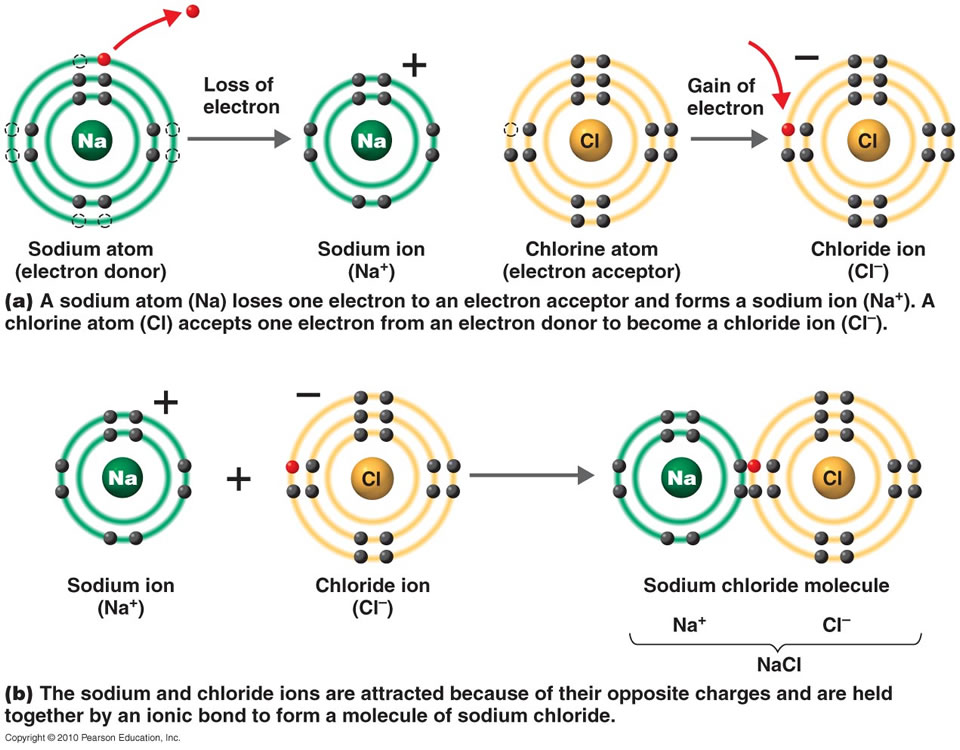
When it comes to chemical bonding, there are different types of bonds that can form between atoms. One of the most commonly known types is the ionic bond, which occurs between a metal and a non-metal. But how do ionic bonds actually form? Let’s dive into the science behind it! Firstly, it’s important to understand that atoms are made up of protons, neutrons, and electrons. Protons are positively charged, neutrons are neutral, and electrons are negatively charged. Atoms are stable when they have a full outer electron shell, which is why they bond with other atoms. In an ionic bond, one atom donates its outer electrons to another atom, resulting in a transfer of electrons and the formation of ions. To better understand this process, imagine we have a sodium atom (Na) and a chlorine atom (Cl). Sodium has one outer electron and chlorine has seven outer electrons. Sodium wants to give away its lone outer electron to achieve a full outer shell, while chlorine wants to gain one more electron to fill its outer shell. When these two atoms come together, sodium donates its lone electron to chlorine, resulting in the formation of a positively charged sodium ion (Na+) and a negatively charged chlorine ion (Cl-). These ions are attracted to one another due to their opposite charges, forming an ionic bond. So why do atoms form ionic bonds in the first place? It all comes down to achieving stability. By transferring electrons, the atoms involved are able to achieve full outer shells and become stable. In the case of sodium and chlorine, the resulting compound is sodium chloride (NaCl), also known as table salt! But how do we know that ionic bonds exist in the first place? Scientists can use a variety of tools and techniques to study chemical bonding. One such technique is X-ray crystallography, which involves shining X-rays on a crystal and analyzing the way the X-rays diffract. By studying the diffraction patterns, scientists can determine the arrangement of atoms within the crystal and the types of bonds that exist between them. In conclusion, ionic bonds form when one atom donates its outer electrons to another atom, resulting in the formation of ions with opposite charges that are attracted to each other. This type of bonding is important in many areas of chemistry, from the formation of table salt to the structure of crystals. By studying the science behind it, we can better understand the world around us and the way atoms interact with one another.
If you are looking for How do Ionic Bonds Form? - YouTube you’ve visit to the right place. We have 5 Images about How do Ionic Bonds Form? - YouTube like Ionic bonding - Wikipedia, Ionic Properties and also How Does An Ionic Bond Form Between Sodium And Chlorine - slideshare. Read more:
How Do Ionic Bonds Form? - YouTube
 www.youtube.comionic
Ionic Properties
 www.breakingatom.comionic halogen table sodium chloride atom bond structure properties compound bonding definition salt chlorine periodic move compounds ions electronic facts
Savvy-chemist: Ionic Bonding (2) Dot And Cross Diagrams/Lewis Structures
 derekcarrsavvy-chemist.blogspot.comionic chemistry bond bonds chemical bonding dot diagram cross lewis diagrams science covalent molecule structures vs why which shows chemist
How Does An Ionic Bond Form Between Sodium And Chlorine - Slideshare
.PNG) slidesharenow.blogspot.comionic bonding between chlorine
slidesharenow.blogspot.comionic bonding between chlorine
Ionic Bonding - Wikipedia
 en.wikipedia.orgionic sodium chloride bond ion between forces difference interactions intramolecular bonds diagram intermolecular bonding form properties solids structure does strong
Ionic bonding. Ionic halogen table sodium chloride atom bond structure properties compound bonding definition salt chlorine periodic move compounds ions electronic facts. Savvy-chemist: ionic bonding (2) dot and cross diagrams/lewis structures